Brooklyn School of Excellence Early Excellence

Blogs
What Children Learn in a Structured Preschool Environment
The preschool years influence how children begin seeing themselves as learners. Before they can confidently read books on their own or solve more advanced academic problems, children are already growing the communication, listening, social, and problem-solving skills they will rely on for years to come.
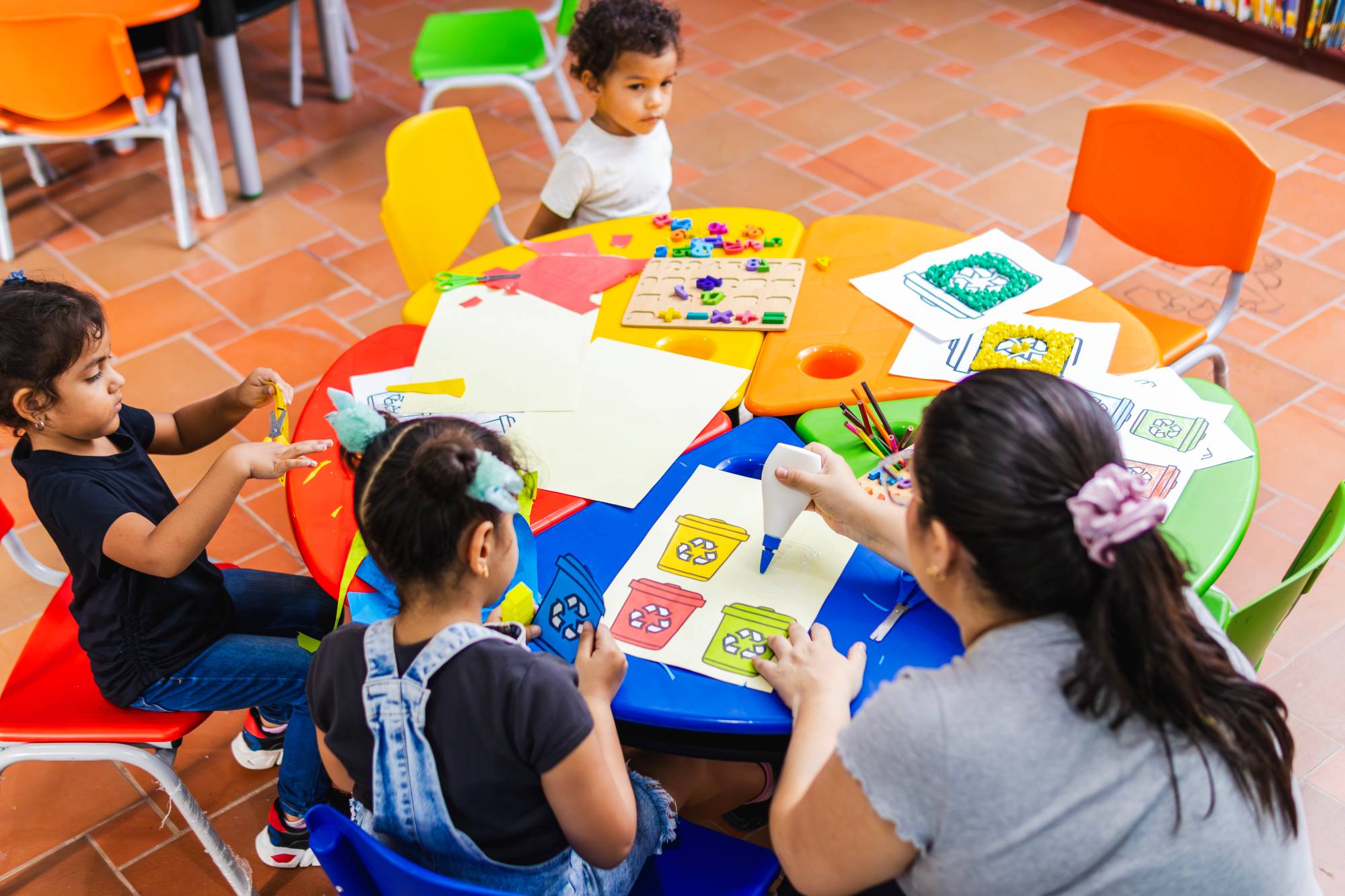
Children tend to learn best when their days include both structure and exploration. A consistent rhythm of circle time, storytelling, creative art, outdoor play, music, guided group activities, and quiet reading moments helps children feel secure while keeping them actively engaged.
Through these daily experiences, children learn to follow directions, express ideas, cooperate with classmates, ask questions, and become more comfortable participating in the classroom.
At BSE Early Excellence Academy, our early childhood education programs in Brooklyn combine education, creativity, and child-centered learning to help every child participate more freely and become more socially engaged. Here’s a closer look at what children learn in structured preschool classrooms like ours.
What Does Preschool Teach Children?
Many parents ask, “What does preschool teach?” beyond basic letters and numbers. The answer includes far more than academics alone.
Preschool programs nurture a broad set of academic, social, and emotional skills that prepare children not only for kindergarten but for lifelong learning.
Children learn by doing through music, storytelling, counting games, art, and playing with classmates. Teachers guide them in recognizing letters and numbers, expressing feelings with words, and following step-by-step directions. As they work together on projects, they naturally practice cooperation, empathy, and patience.
Preschool classrooms also help children develop independence and confidence. Structured routines teach children how to transition between activities and complete simple tasks on their own.
Most importantly, preschool learning adapts to young minds through engaging, hands-on activities designed to make complex concepts simple, joyful, and meaningful.
What Do Kids Learn in Preschool Academically?
Preschool lays the academic foundation for a child’s educational journey without making learning feel like “schoolwork.” The classroom becomes a space where curiosity fuels understanding, and every discovery sparks excitement.
Early Literacy Skills
Children explore sounds, letters, and stories through songs, rhymes, and shared reading. They begin to recognize their names in print, understand that words have meaning, and build listening and comprehension skills through fun storytelling sessions.
Basic Math Concepts
Using play-based lessons, children count blocks, sort colors, notice shapes, and start gaining awareness of patterns. Activities like measuring ingredients during a cooking project or comparing objects by size teach math in a natural, hands-on way.
Cognitive Development
Preschool learning activities encourage problem-solving and memory building. When children complete puzzles, make predictions in science experiments, or recall steps in a story, they strengthen focus, attention, and critical thinking while having fun.
Social and Emotional Skills Developed Through Preschool Learning Activities
A preschool classroom helps children grow socially and emotionally just as much as academically. Daily interaction with teachers and classmates gives children opportunities to practice communication, cooperation, empathy, and emotional awareness in real-life situations.
When children help a friend during a puzzle or comfort a classmate who’s feeling shy, they’re learning empathy and teamwork. These skills form the heart of strong social relationships.
An effective early childhood learning program also helps children learn how to manage emotions and respond appropriately in social settings. Teachers support children through challenges, conflicts, excitement, and frustration.
As classroom participation becomes more familiar, children often become more independent, socially engaged, and comfortable interacting with others in supervised environments.
How Preschool Learning Activities Support Child Development
Young children absorb information more effectively when they can actively participate in the process. That is why hands-on experiences remain such an important part of quality preschool learning activities.
Creative experiences like painting, singing, storytelling, dramatic play, and sensory exploration help strengthen communication, imagination, listening, and fine motor development in natural ways. Building exercises, simple science discovery, sorting games, and age-appropriate challenges also introduce early STEM concepts while encouraging curiosity and independent thinking.
Interactive experiences help children stay engaged because they are directly involved rather than simply watching or memorizing information. Many classroom projects also support coordination, hand control, concentration, and creative expression through movement and guided exploration.
The Importance of Routine in an Early Childhood Learning Program
Children feel safe and confident when their day follows a clear rhythm. Routine is the backbone of a well-structured early childhood learning program.
Predictable transitions, like moving from music time to snack time, help children understand structure, responsibility, and the concept of time. Over the weeks, they learn to clean up, line up, and prepare for new activities with growing independence.
These consistent patterns not only encourage focus and participation but also reduce anxiety. Children know what comes next, which helps them engage fully in the moment. A reliable routine, led by nurturing teachers, transforms preschool into a place of both comfort and challenge.
How Structured Preschool Programs Prepare Children for Kindergarten
A thoughtfully designed preschool is the bridge between play at home and the structure of kindergarten. Here, children learn how to follow directions, sit during group lessons, and transition smoothly through activities.
By the time they leave preschool, children are familiar with literacy and math concepts, classroom rules, and collaborative learning. Just as importantly, they’ve grown more self-assured.
Structured preschool programs, like those at BSE Early Excellence Academy, provide a gradual introduction to academic expectations while preserving the spirit of discovery. The balance makes sure that when children enter kindergarten, they do so with the emotional readiness, communication skills, and focus to thrive in a larger classroom environment.
What Parents Should Look for in a Structured Preschool Environment
A preschool classroom reveals a great deal about the quality of the learning experience within the first few minutes. Children should appear engaged, comfortable, supported, and encouraged to participate without feeling pressured or overwhelmed.
A quality early childhood learning program will have:
- Qualified teachers who create nurturing and encouraging classroom experiences
- A balanced approach that supports academics, creativity, and social development
- Safe spaces with age-appropriate books, toys, sensory tools, and learning materials
- Engaging preschool learning activities that encourage participation and curiosity
- Strong communication between teachers and families
- A clear educational philosophy that aligns with the family’s goals and values
The best preschool programs in Brooklyn help children feel comfortable, confident, and excited to learn each day while creating strong partnerships with parents throughout the learning journey.
Where Early Confidence and Learning Begin
The preschool years are filled with firsts. Within a structured, nurturing environment, children learn how to think critically, communicate clearly, and express themselves with confidence. They begin mastering the building blocks of literacy and math, as well as discovering the joy of learning through music, art, and exploration.
BSE Early Excellence Academy’s preschool programs are designed to help children grow academically, socially, and emotionally within a nurturing, child-centered environment. We invite Brooklyn families to enroll with us and discover how meaningful early learning experiences can inspire confidence, curiosity, and a lifelong love of learning. Call us at 347-988-9944 to learn more about enrollment today.